
When audiences first tuned in to The Pitt, many expected another intense hospital drama—fast dialogue, high-stakes trauma, emotional monologues delivered under fluorescent lights. What few anticipated was just how authentic the series would feel. The beeping monitors, the rhythm of triage, the quiet efficiency between nurses and doctors—it all carried a texture that felt lived-in rather than performed. And now that a behind-the-scenes detail has come to light, that realism makes even more sense.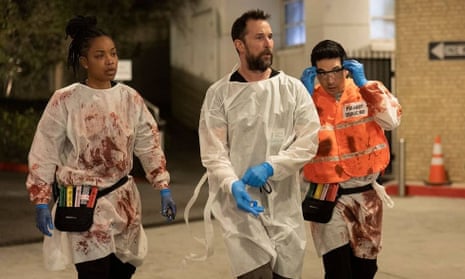
One of the show’s recurring actors, Ned Brower, who plays nurse Jesse Van Horn, is not just portraying an emergency room nurse. He is one in real life. Unlike the traditional casting approach of hiring performers who study medical mannerisms, the producers of The Pitt made a deliberate decision to bring actual frontline experience into the frame. Brower is a practicing ER nurse, and according to his own interviews, that authenticity was precisely why he was cast. He performs procedures the way he would in a real hospital—because he has done them countless times before.
For many viewers, this revelation was startling. A fri end of mine who has followed medical dramas for years reacted with disbelief: “Wait, he’s not acting?” That reaction speaks volumes. In an industry where technical advisors typically remain off-camera, The Pitt went a step further. It didn’t just consult realism; it embedded it directly into the cast.
This choice reflects a broader commitment by the production team to create a professional atmosphere that mirrors real emergency departments. The series has often been compared to ER, the iconic medical drama that set the standard for procedural authenticity in the 1990s. But while ER relied heavily on medical consultants guiding actors, The Pitt blurs the line between fiction and reality even more boldly. It places real-world experience directly into performance.
That distinction matters more than casual viewers might realize. Emergency medicine is a choreography of instinct and training. The way a nurse adjusts an IV line, calls out vital signs, or moves around a trauma bay is not easily replicated through rehearsal alone. Those actions are muscle memory. They carry subtle timing and confidence that cannot be faked convincingly. By placing someone with lived experience into that environment, the show gains a layer of credibility that even the most dedicated actor might struggle to emulate fully.
Industry observers have noted that this commitment to authenticity may be one reason the show has quickly gained award nominations and critical praise. But beyond accolades, there is something deeper at play. In an era when audiences are increasingly savvy and quick to spot inaccuracies, authenticity has become currency. Viewers don’t just want drama; they want to believe it.
Another viewer commented online that the hospital in The Pitt feels “less like a set and more like a shift.” That sentiment captures what the producers appear to have been aiming for. The decision to cast a working nurse was not a publicity stunt revealed after the fact. It was a structural investment in atmosphere. The professional tone on set reportedly mirrors the seriousness of a real ER, reinforcing performances across the ensemble.
It also sends a subtle message about respect for the profession being portrayed. Too often, medical dramas prioritize spectacle over process. They highlight the rare, explosive cases while overlooking the disciplined routine that defines emergency care. By incorporating someone who lives that routine daily, the show honors the craft rather than caricaturing it.
When the news of Brower’s real-life credentials circulated, the reaction ranged from admiration to astonishment. “That explains everything,” one fan wrote. Indeed, it does. It explains the natural cadence in certain scenes, the absence of exaggerated gestures, the quiet authority in background moments that might otherwise go unnoticed.
This behind-the-scenes decision reveals something essential about the series’ philosophy. Authenticity is not an accessory added in post-production; it is foundational. The producers did not rely solely on talented performers to simulate professionalism. They ensured that professionalism was physically present in the room.
In retrospect, the show’s success feels less surprising and more inevitable. When storytelling aligns with lived experience, audiences sense it—even if they cannot immediately identify why. The investment in detail, in atmosphere, in genuine expertise, creates a ripple effect that elevates every scene.
What initially seemed like just another compelling medical drama now appears to be something more deliberate. The realism of The Pitt was not accidental, nor was it achieved by actors alone. It was built through an intentional blending of performance and profession. And once that secret was revealed, it became clear why so many viewers felt that what they were watching was not just convincing—it was real.


