
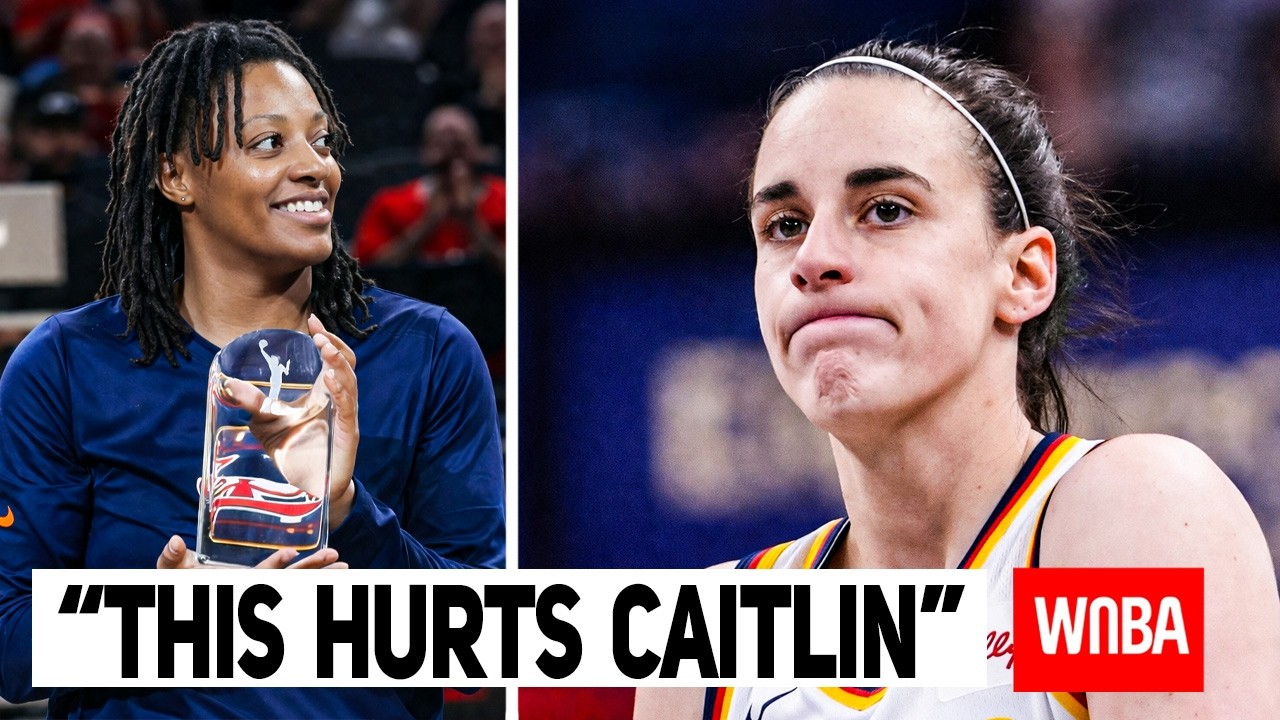
The Indiana Fever are currently navigating the most significant juncture in the history of the franchise, and perhaps in the history of the WNBA itself. As the league prepares to transition into a new economic era in 2026, the Fever find themselves holding a set of assets so valuable they are almost radioactive. With a generational supernova in Caitlin Clark and a powerhouse cornerstone in Aliyah Boston, the organization has the ingredients for a dynasty. However, as any veteran of the front office wars will tell you, having the ingredients is not the same as baking the cake. The team is currently staring down a roster math problem that could determine whether Clark’s career in Indianapolis is defined by championship parades or “what-if” documentaries.
At the heart of this controversy is the impending decision regarding Kelsey Mitchell. Mitchell has been a tireless servant of the Fever, a scoring guard who stayed loyal through the leanest of years, including a miserable five-win season where the light at the end of the tunnel seemed to have been extinguished. Now, with the new Collective Bargaining Agreement (CBA) set to skyrocket the salary cap from roughly $1.5 million in 2025 to a staggering $7 million in 2026, the Fever have the money to reward that loyalty. But in the cold, hard world of professional sports, rewarding the past can often come at the expense of the future.
The reported math is jarring. If Indiana uses the core designation on Mitchell again, they could be looking at a one-year commitment in the neighborhood of $1.4 million. In the old cap, that would have been impossible; in the new cap, it is a significant chunk of change that carries massive philosophical weight. This isn’t just about whether Kelsey Mitchell is a good basketball player—she clearly is an elite scorer. This is about whether her style of play, which often leans toward isolation and deliberate half-court sets, can coexist with the high-octane, transition-heavy engine that Caitlin Clark requires to reach her full potential.
To understand the stakes, one must understand the “Caitlin Clark Effect” beyond the ticket sales and television ratings. On the court, Clark is a force of nature that thrives on chaos, speed, and reactive decision-making. She is at her most lethal when the game is played in the margins of a few seconds, where her vision and processing speed can dismantle a defense before it has the chance to set. Clark has already publicly expressed frustration with a “funky and slow” pace that limits the team’s transition opportunities. This wasn’t just a post-game quote; it was a distress signal.
If the Fever front office chooses to pay Mitchell a premium to maintain the existing hierarchy, they are effectively choosing a “compromise” style of play. In a compromise system, Clark is often relegated to an off-ball observer while isolation possessions eat up the clock. This doesn’t just make the game less aesthetically pleasing; it fundamentally reduces the statistical environment around the team’s most important player. Fewer transition looks mean fewer easy assists and fewer open threes for Clark. In a league where the new CBA ties financial escalators to All-WNBA milestones and MVP voting, slowing down the game is a form of unintentional sabotage.
The financial pressure doesn’t stop with Mitchell. The new CBA reportedly creates a much faster road to historic, “super-max” money for young stars who hit major milestones early. Caitlin Clark and Aliyah Boston are both on trajectories that will demand unprecedented contracts sooner than the organization might expect. If Indiana boxes itself into high-cost veteran contracts now, they may find themselves unable to afford the connective tissue—players like Lexie Hull or Sophie Cunningham—that makes the ecosystem work. These “role players” are the switchable defenders, the rim runners, and the low-maintenance spacers who allow a star like Clark to shine. In a $7 million cap world, depth is the new competitive advantage, and you cannot have depth if your top-heavy salary structure is built on conflicting identities.
General Manager Amber Cox and President Kelly Krauskopf are now facing a test of their institutional courage. There are two distinct paths forward. The first path is the comfortable one: keep the core together, pay Mitchell her “veteran reward,” and hope that chemistry and talent will eventually bridge the gap between two different styles of basketball. This path is politically safe and keeps the locker room happy in the short term. However, history is littered with talented teams that failed to win because they refused to embrace a clear, singular identity.
The second path is the ruthless one. It involves recognizing that Caitlin Clark is the sun around which every other planet in the Fever universe must orbit. This could mean using the core tag on Mitchell not to keep her, but to convert her value. With expansion teams entering the league and desperate for established scoring stars, Mitchell is a premier trade asset. Converting a high-cost isolation scorer into multiple pieces that fit the Clark-Boston timeline—size, defensive grit, and transition speed—could be the masterstroke that secures a title.
The market has already signaled what it wants to see. The record-breaking crowds and the cultural obsession with the Fever are driven by the vision of a new, faster version of women’s basketball. Nobody is tuning in to watch a cautious, medium-speed offense built around veteran comfort zones. They are tuning in to see the “limitless” range and the full-court passes. If the organization leans away from that identity to preserve a legacy hierarchy, they are ignoring the very thing that made them the center of the sports world.
This isn’t about “hating” on a veteran player who has given her all to the city of Indianapolis. It is about the cold reality of a championship window that is open right now. In professional sports, time is the only resource you can’t buy more of. Every season spent trying to make a “funky” system work is a season of Caitlin Clark’s prime that you can never get back. The new money brought by the CBA is a tool, but a tool is only as good as the person wielding it. If the Fever use that money to stay stuck in the past, they will watch as more innovative franchises—teams that aren’t afraid to build “machines” rather than “compromises”—hoist the trophies that should have belonged to Indiana.
As the 2026 season approaches, the choices made in the front office will echo louder than any sneaker squeak on the hardwood. The Fever are out of room for excuses. The money is there, the stars are there, and the fan base is there. The only thing left to see is if the leadership has the vision to build a team that actually fits the moment. The “roster fight” isn’t just about numbers on a spreadsheet; it’s a battle for the soul of the franchise. Either Indiana embraces the future and the speed that comes with it, or they pay a premium to watch the rest of the league pass them by. The clock is moving, and the answer is coming sooner than anyone thinks.


